
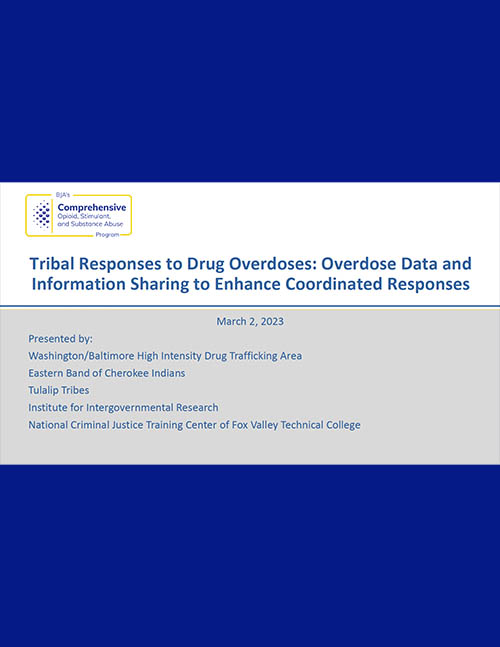
PPT slides for Tribal Responses to Drug Overdoses: Overdose Data and Information Sharing to Enhance Coordinated Responses webinar - 508C
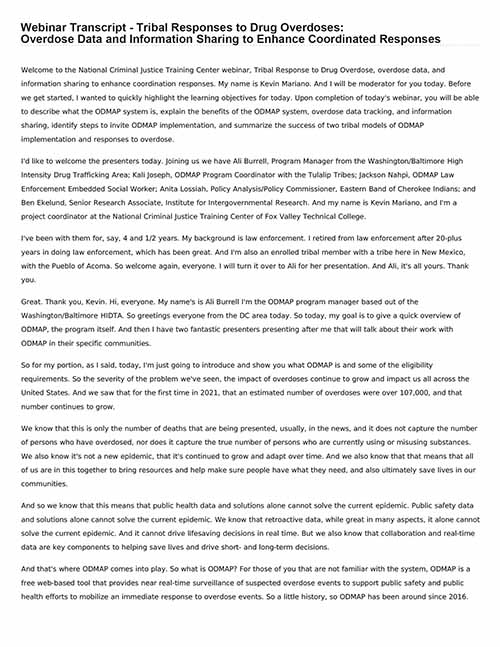
Transcript for Tribal Responses to Drug Overdoses: Overdose Data and Information Sharing to Enhance Coordinated Responses webinar - 508C
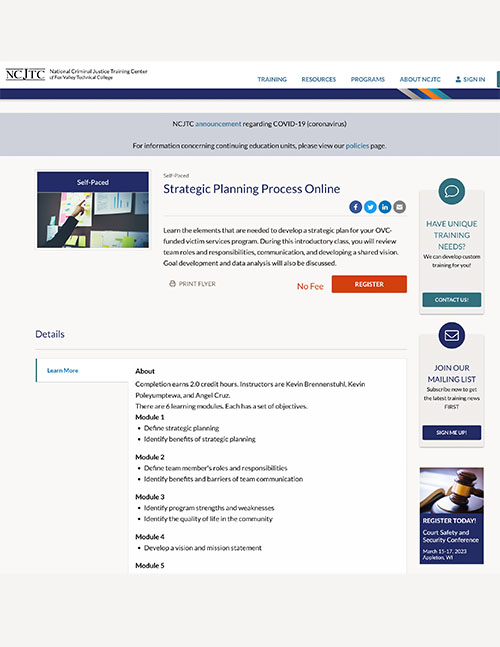
Self-Paced course for Strategic Planning Process Online

Discuss an overview of the Overdose Detection Mapping Application Program (ODMAP). Review the benefits of being able to track and access real-time suspected overdose data to support public safety and public health efforts to help mobilize immediate responses to sudden increases or spikes in overdose events. Identify the initial steps needed to set up ODMAP implementation for your community. Explore two successful tribal models of ODMAP implementation, coordinated responses to overdoses, and related alcohol and substance misuse programs and services. The two tribal models that will be highlighted include The Tulalip Tribes and Eastern Band of Cherokee Indians.
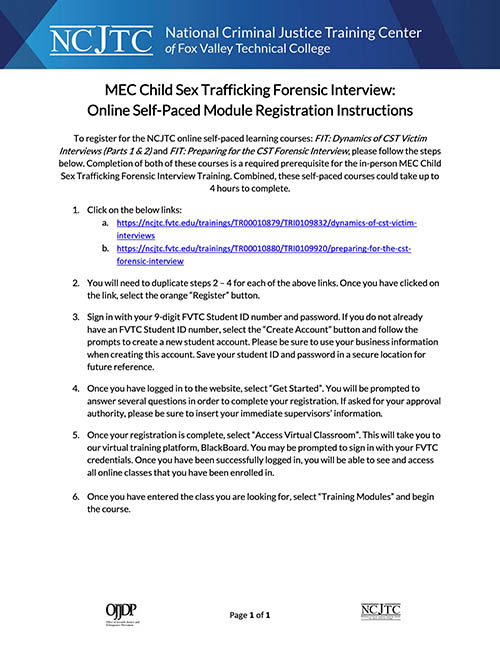
Instructions to register for the On Demand Community and enroll in the Forensic Interview Training (FIT) online courses
PPT Slides for Developing Cognitive, Social and Emotional Skills: Practical Ways to Use Cognitive Behavioral Therapy - 508C
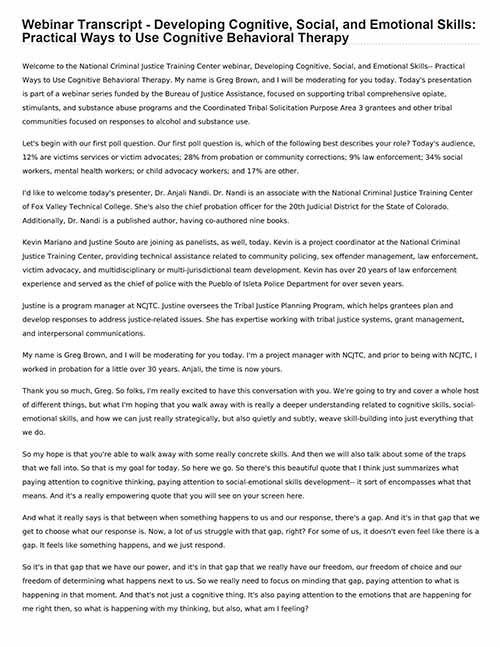
Webinar Transcript for Developing Cognitive, Social and Emotional Skills: Practical Ways to Use Cognitive Behavioral Therapy - 508C

What to know before bringing a Smart Device home

What to know before bringing a Smart Device home - with Contact Us form
The role of practitioners in the criminal justice system is rapidly changing from enforcer or resource broker to facilitator of behavior change. Cognitive behavioral skill building is an evidence-based practice for changing difficult and entrenched behaviors including antisocial thinking, addiction, and impulsivity. The partnership between treatment providers and criminal justice professionals requires that all professionals understand cognitive behavioral therapy and skill development. During the webinar, you will walk through the steps to develop cognitive behavioral skills in regular and on-going conversations with clients. Additionally, you will learn about the elements of good, evidence-based cognitive behavioral services.