Resource for ACEs and Substance Use - Culturally Grounded Trauma-Informed CWS for AI-AN - 508 Compliant

Transcript from July 17, 2024 Trauma-Informed Services Webinar
Gain knowledge and skills in interviewing trauma survivors, and identifying and responding to trauma-based behaviors. Discuss vicarious trauma and secondary trauma (compassion fatigue) and how it affects those in the helping profession. Learn some new self-care tips that can be used to avoid burn-out.

Gain a deeper understanding of who trauma impacts and how it presents itself from within the US population. Hear about intergenerational trauma and survival from Viktor Frankl, a World War II survivor who will share first-hand experiences with you. Learn how trauma and criminal behavior are connected.

Over 80% of all people under supervision in the criminal justice system have experienced trauma or endorse symptoms of trauma. Without being trauma-informed, we miss a vital component of responsivity when attending to client needs. Learn the foundation of trauma, the impact of trauma on the brain, and how to recognize symptoms in ourselves and others. You will also explore what it means to be trauma-informed in every interaction as well as strategies to support ourselves and others through a trauma-response.
Join us to define trauma informed care approaches, develop skills to best recognize and effectively address trauma, and discuss promising practices. Each 60 minute session features a brief overview presentation followed by an opportunity to engage in an in-depth facilitated discussion and question and answer (Q&A) session with subject matter experts, practitioners in the field, and other attendees. Your participation is encouraged and additional questions will be taken during this live session. Prior to the session, we will gather feedback from you about what you would like to learn about the topic from the experts.

Learn about the basic definition of trauma and what it means to be trauma-informed. Examine how stress and trauma impact the brain and the primary areas of the brain involved with responses to stress. Learn about various types of trauma, i.e. inter-generational, childhood, and complex trauma, and what should be considered when working with Native American clients who have experienced trauma.

This handout corresponds to the What is Trauma? webinar on 2/6/2018.
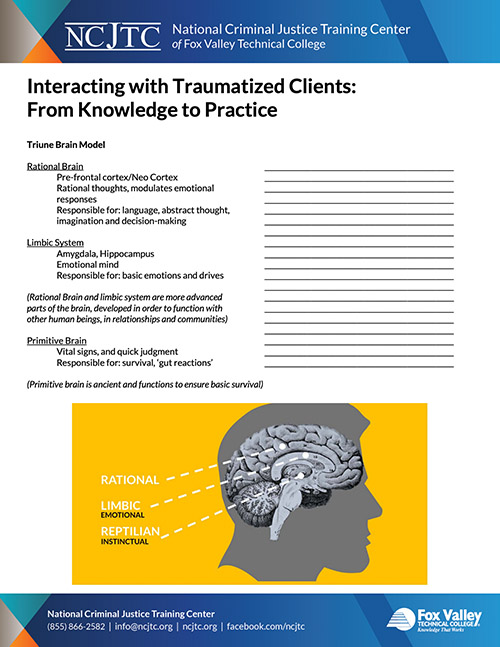
A completed "Interacting with Traumatized Clients" handout. This includes the "Blank Person" exercise.

Protecting our youth is a fundamental goal for those who work in the criminal justice system or in social services. What steps can you take to help limit the trauma our youth potentially face? Consider three ways to help improve your role as a trauma-informed provider.