Join us for an intensive training focused on understanding and building relationships between the forensic pathologist, homicide investigator, and prosecutor in successfully investigating and prosecuting child homicide cases. Learn autopsy protocols, forensic essentials, and the criticality of determining the cause and manner of death. Understand the unique aspects of investigating a child homicide including interviewing and interrogation, suspect pool development and the role and importance of the prosecutor in gaining appropriate convictions.

Explore the challenges involved with no body homicide investigations. Most start as missing persons cases; the suspect’s head start coupled with the absence of the victim’s body leaves gaping holes in the investigation. Join us to hear from experienced instructors as they provide the framework and tools to build a prosecutable circumstantial case—regardless of the age of the case—from proving the victim is dead using established practices such as victimology, interviews, documents/records/digital footprint to search strategies and best practices in documentation. This training will also provide established prosecution strategies that maximize the likelihood of success. During instruction, there will be an opportunity to share your case as a class participation case study exercise.

Improve investigative techniques and prosecutorial efforts needed to successfully decipher unresolved and cold cases. Explore essential investigative, forensic and prosecution methodologies through the dissection of actual cases, best practice examples, interactive discussions, and contemporary resources. Learn proven strategies to avoid complications that are detrimental to the prosecution of cold cases. Discuss practices relevant to the establishment and maintenance of an efficient cold case unit.

Examine effective strategies and best practices for the reinvestigation of cold and historical child homicides, unidentified human remains and long-term missing children investigations when there is no body. During this webinar, we will illustrate how children can be the perfect victim, and as such, how their cases can become historical and unresolved. You will be provided with investigative strategies for establishing that a crime has been committed, identifying those responsible for the crime, and for proving or disproving facts and circumstances in the original unresolved investigation. Learn how an MDT response can result in a successful resolution.

Examine proven methodologies associated with the management and supervision of those responsible for the investigation of unresolved child homicides, identification of unidentified human remains and the location of long-term missing children. Explore the critical administrative and supervisory strategies necessary for the resolution of these cases. Demonstrate the importance of a multidisciplinary approach using innovative methodologies and current forensic capabilities to achieve resolution on cases.

Examine a non-confrontational, rapport-based approach to interviewing suspects in cases of stereotypical child abduction, where sexual assault or homicide may be involved. Rather than relying on predetermined themes, investigators will learn how to influence suspects to provide their own justifications or excuses --creating a psychological pathway for the disclosure of detailed information about the crime. The emphasis is on establishing trust, listening carefully to the suspect's account, and presenting evidence through a sincere, non-threatening approach. This method aims to help investigators uncover the truth while avoiding aggressive tactics that could lead to resistance or false statements. Participants will learn how to balance active listening with strategic contradictions to get to the truth.
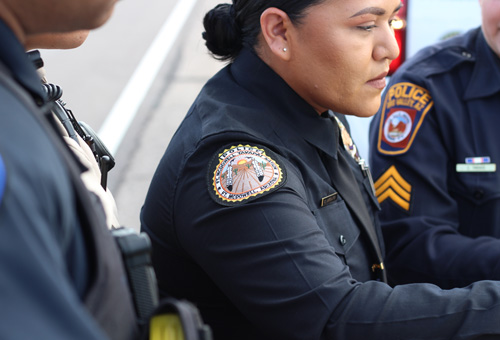
Discover proven investigative strategies and acquire the requisite skills to investigate and manage unresolved homicides and long-term missing children and adult cases in Indian Country. Explore the roles and responsibilities of an unresolved case team when working these investigations. Gain insight into the dynamics of violent crime investigations, missing persons, homicides, and no-body homicide investigations. Understand how to identify services and resources in support of unresolved investigations. Best practices and lessons learned will be illustrated from a case study derived from a collection of real-world examples. This course is consistent with Best Practice recommendations published by the U.S. Department of Justice, National Institute of Justice.
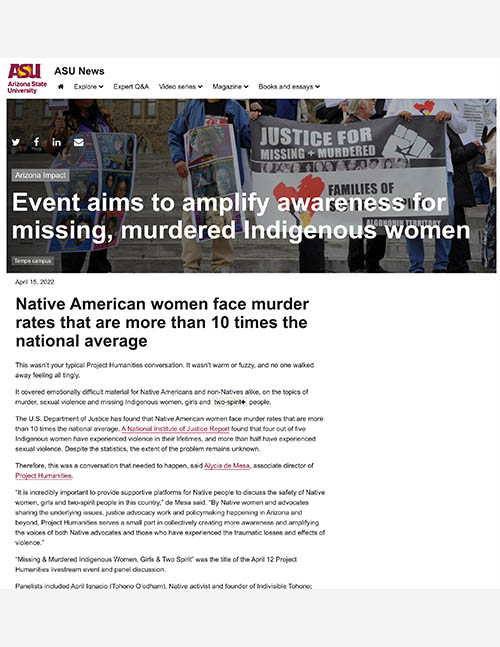
According to a report from the Centers for Disease Control, murder is the third leading cause of death for Indigenous women and girls between the ages of 1 and 19. A CDC study found homicide rates for Native American women were almost three times those of non-Hispanic white women. This type of violence has been going on for centuries, according to Enos.

Identify the five key categories of missing child case and explore how to spot the warning signs that place a child at greater risk for homicide or abduction. Discover the patterns and factors that matter most and see how a strong initial assessment can drive smarter resource deployment and set the investigation on the right track from the start.

Pediatric aquatic abuse has a high risk of being missed as it can lack visible injuries, can silence the victim literally and figuratively, and being a form of asphyxiation, can later present as respiratory illnesses or other injuries. Aquatic homicides are at risk of both cause and manner of death misdiagnosis, partially because drowning is a circumstance-dependent, diagnosis of exclusion that can facilitate active staging by offenders.